
International relations
Outline
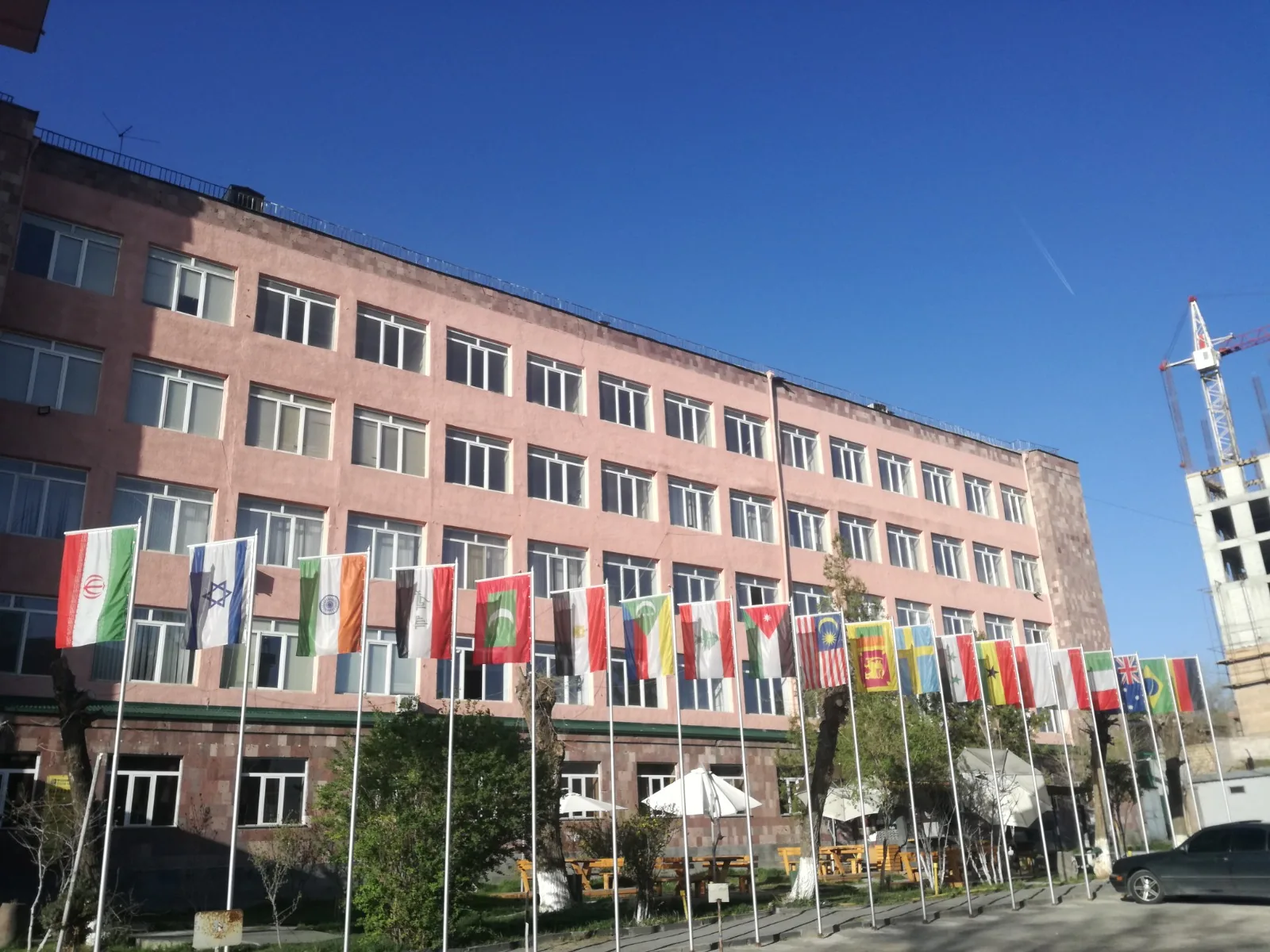
In the last decade, the YHU has progressively become inter-national, with Armenia’s highest share of international students (53%), international conferences, and expanding cross-border ties. Today Haybusak is home to students and teachers from various cultural backgrounds.
Students from more than 30 countries have graduated from YHU, and that trend has progressively increased over the past decade. YHU is among the leading HEIs in Armenia in terms of the number of international students.
YHU has made significant progress in offering study programmes in English, which constitute one third of all programmes.Credits from foreign universities for a specific time of study are fully recognized by the YHU.
Internationalization Strategy
The overarching goal of YHU’s Internationalization Strategy is to enhance the quality of learning, teaching, and research and to promote civic responsibility among YHU students and employees. Specifically, with this Strategy, YHU aims to

Attract talented students and renowned international teachers to enhance the diversity of the student population and enrich their cultural and educational experiences;
Strengthen the University’s profile and increase its international visibility and reputation.
The sub-goals of the internationalization strategy are to deploy international mobility programs and expand YHU’s international relations and participation of external stakeholders.
International Projects
he project “Simulation in Undergraduate Medical Education for Improvement of Safety and Quality of Patient Care” (SAFEMED+) serves to tackle important issues, related to undergraduate medical education in Georgia, Armenia and Ukraine, which takes roots back from collapse of Soviet Union and crush of soviet educational system. The broad goal of SAFEMED+ is to improve the quality of medical education by introducing the medical simulation methods in curriculum.
Despite progressive steps, taken by partner countries towards adopting western values and implementing up-to-date trends within educational systems as well, undergraduate medical education and practical training of prospective medical professionals particularly, yet remains to be a weak link on the regional level.
The enhancement of patient care safety and quality by promoting simulated learning of Clinical Skills implemented in Competency Based Medical Education based Curriculum in Undergraduate Students is the
primary impact of the SAFEMED+.
STAFF

David Mamyan
- international@haybusak.am
- International Partners
- Superior Institute of M.Teixeira Gomes
Portimao, Portugal
- Institute of Education and Science
Lisbon, Portugal
- Egas Moniz School of Health and Science
Almada, Portugal